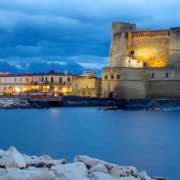

Gaiola Marine Protected Area

Gaiola Marine Protected Area: A Hidden Treasure of Nature and History

The Gaiola Marine Protected Area is one of Naples’ most remarkable and enchanting places — a natural sanctuary where sea, history, and archaeology come together in perfect harmony. Located along the Posillipo coast, in front of the Virgiliano Park, it is renowned for its crystal-clear waters, vibrant marine life, and submerged Roman ruins belonging to the ancient Villa of Pausilypon. It’s a true paradise for lovers of the sea, snorkeling, and history.

History and Legend of Gaiola

The name “Gaiola” comes from the two small tuff islands connected by a narrow stone bridge just off the coast. Since Roman times, this area was known as a peaceful retreat for leisure and contemplation. Beneath the waves lie the remains of the villa of Publius Vedius Pollio, a wealthy Roman who built an opulent seaside residence complete with terraces, docks, and decorative pavilions.

Over the centuries, the Gaiola has remained a place of fascination and mystery, surrounded by legends — including the so-called “curse of the villa,” inspired by the tragic fates of several of its past owners. Today, however, the area stands as a symbol of environmental preservation and cultural revival.

Marine Life and Underwater Heritage

Covering over 40 hectares, the Gaiola Marine Protected Area is home to a diverse marine ecosystem. Its seabed, rich with caves, rocks, and seagrass meadows, teems with fish, crustaceans, and mollusks. Thanks to strict environmental protection, the water is exceptionally clear, allowing visitors to see the ancient Roman ruins beneath the surface with astonishing clarity.

Snorkeling or taking a guided dive here feels like entering an underwater archaeological park — swimming above columns, mosaics, and remnants of ancient villas now embraced by sea life.

The Underwater Park of Gaiola

The area also serves as a scientific research and environmental education center, managed by the Centro Studi Interdisciplinari Gaiola Onlus. Visitors can join guided tours, educational workshops, and kayak or glass-bottom boat excursions that reveal the submerged treasures without diving.

The park is divided into two zones: one dedicated to conservation and research, and another open to the public with controlled access to preserve the delicate ecosystem.

Visiting the Gaiola

Entrance to the Gaiola Marine Park is free but regulated, with limited daily admissions to protect the environment. Visitors are encouraged to book in advance through the official website. The site can be reached on foot via Discesa Gaiola in Posillipo, or by public transport (stop “Piazza Sannazaro” and then a bus toward Posillipo).

Why Visit the Gaiola Marine Protected Area

A visit to the Gaiola Marine Protected Area is a journey through both time and nature. Between turquoise waters,


Beaches of Posillipo

The Beaches of Posillipo: Sea, Cliffs, and Relaxation in Naples’ Most Elegant District

The beaches of Posillipo are among the most enchanting and picturesque spots along the Neapolitan coast. Nestled between rocky cliffs and lush greenery, these small coves offer crystal-clear waters and breathtaking views of the Bay of Naples, with Capri, Mount Vesuvius, and Castel dell’Ovo on the horizon. They’re the perfect choice for anyone looking to enjoy the sea without leaving the city — a true blend of natural beauty and urban charm.

The Magic of Posillipo’s Sea

Posillipo has always been associated with elegance and scenic beauty. Its hidden coves, surrounded by Mediterranean vegetation, are like natural paintings — turquoise waters, sunlit rocks, and the peaceful sound of the waves.

Many of these beaches can only be reached by boat or via steep stairways descending from the hill, but the effort is well worth it: the views and atmosphere are simply unforgettable.

The Most Famous Beaches

Among the best-known beaches of Posillipo are:

  • La Gaiola, located within the Marine Protected Area of Gaiola Underwater Park, a truly magical site where nature and history meet. Here, visitors can swim among ancient Roman ruins submerged beneath the sea.
  • Marechiaro, famous for its “little window” and charming fishing village, features small platforms and beach clubs that allow easy access to calm, transparent waters.
  • Riva Fiorita, a secluded cove surrounded by historic villas and lush gardens, accessible also by boat — perfect for those seeking peace and privacy.

Several private beach clubs along the coast also offer modern facilities, restaurants, and all the comforts needed for a relaxing day by the sea.

A Coastal Experience of Beauty and Serenity

Swimming in Posillipo means experiencing Naples in its most natural and exclusive form. The waters are clear, the cliffs dramatic, and the views across the bay are unforgettable. At sunset, the golden light reflecting off the sea creates a romantic and timeless atmosphere.

How to Reach the Beaches

The Posillipo beaches stretch from Mergellina to Capo Posillipo. Some are accessible by foot or public transport (bus stops along Via Posillipo), while others can only be reached by sea, using small boats or water taxis departing from the marinas of Mergellina or Marechiaro.

Why Visit the Beaches of Posillipo

The beaches of Posillipo perfectly combine nature, tranquility, and elegance. They offer a seaside escape right within the city — a place to unwind, swim, and admire the stunning coastline of Naples. Whether for a quick swim, a day under the sun, or a quiet moment by the sea, Posillipo embodies the most refined and poetic soul of Naples.

Parco Virgiliano of Naples

Parco Virgiliano: Nature, Views, and Relaxation Overlooking the Bay of Naples

The Parco Virgiliano, also known as the Park of Remembrance, is one of the most scenic and peaceful places in Naples. Perched atop the Posillipo Hill, this vast green park offers an unmatched panorama of the Bay of Naples, the islands of Capri, Ischia, and Procida, and the Sorrento Peninsula. It’s an oasis of calm and beauty, perfect for a leisurely stroll, a jog among the trees, or simply to admire one of the most breathtaking views in southern Italy.

History of the Parco Virgiliano

The park was inaugurated in the 1930s as the Park of Remembrance, dedicated to the soldiers who died during World War I. Over time, it has become one of the city’s most beloved spots, thanks to its privileged location and the spectacular vistas it offers.

The name “Virgiliano” pays tribute to the Roman poet Publius Vergilius Maro (Virgil), author of the Aeneid and a legendary figure in Neapolitan culture, who, according to tradition, lived and was buried in Posillipo.

Panoramic Terraces and Views

The Parco Virgiliano is a true natural balcony over the sea. From its many terraces, visitors can enjoy spectacular views: to the south lies Capri, to the west Procida and Ischia, and to the east, the majestic Mount Vesuvius and the Bay of Naples. Each viewpoint offers a unique and unforgettable perspective.

The well-kept paths and scenic terraces, equipped with benches, invite visitors to stop and take in the beauty — especially at sunset, when the sky turns golden and the sea glimmers in soft, enchanting light.

Nature and Green Spaces

The park features a rich Mediterranean landscape, with pine groves, lawns, and flowering gardens that create a relaxing and pleasant atmosphere year-round. It’s ideal for families, joggers, and photographers alike. Children can play freely in dedicated areas, while adults enjoy walking trails or simply relax in the shade with a sea view.

In summer, the park also hosts cultural events and open-air concerts, often held in the amphitheater overlooking the bay.

How to Get There

The Parco Virgiliano is located on Viale Virgilio in the Posillipo district. It’s easily accessible by car, scooter, or bus (with routes departing from Mergellina and Piazza Vittoria). Those who enjoy walking will find the climb rewarding, with stunning glimpses of the coastline along the way.

Why Visit the Parco Virgiliano

The Parco Virgiliano is a must-see for anyone visiting Naples. It perfectly combines nature, tranquility, and extraordinary beauty, offering one of the most panoramic experiences in the city. Whether you come for a walk, a sunset view, or simply to breathe in the fresh sea air, the Parco Virgiliano will leave you with a sense of peace — and a lasting memory of Naples at its most poetic.

Belvedere di Sant’Antonio in Posillipo

Belvedere di Sant’Antonio in Posillipo: The Most Breathtaking Viewpoint in Naples

The Belvedere di Sant’Antonio in Posillipo is one of the most stunning panoramic terraces in Naples — a natural balcony overlooking the entire Bay of Naples, with the Vesuvius, Castel dell’Ovo, Capri, and the Lungomare Caracciolo all visible on the horizon. Perched on the Posillipo hill, this spot is beloved by tourists, photographers, and romantics who come here to admire the city in all its splendor.

History and Charm

The viewpoint takes its name from the nearby Convent of Sant’Antonio, built in the 14th century and dedicated to Saint Anthony of Padua. Over the centuries, this area became a favorite destination for travelers of the Grand Tour, who immortalized from here some of the most iconic views of Naples and its bay.

Even today, the view from the Belvedere di Sant’Antonio embodies the classic image of Naples — the deep blue sea, the graceful outline of Mount Vesuvius, and the city unfolding along the coastline. It’s a living postcard, timeless and unforgettable.

The View and the Experience

From the terrace, visitors enjoy a sweeping panorama that embraces the entire gulf. On clear days, you can easily spot Capri, Ischia, and the Sorrento Peninsula, while at sunset the sky explodes with golden and pink hues, creating a truly mesmerizing spectacle.

It’s an ideal place to pause, take photos, or simply let yourself be enchanted by the view. The quiet of the hillside, broken only by the cry of seagulls, contrasts beautifully with the bustling life of the city below, offering a moment of serenity and reflection.

How to Get There

The Belvedere di Sant’Antonio is located along Via Posillipo, one of Naples’ most scenic roads. It can be easily reached by car, scooter, or bus (with routes departing from Mergellina or Piazza Vittoria). For those who enjoy walking, the uphill path rewards visitors with spectacular glimpses of the city and sea.

Why Visit the Belvedere di Sant’Antonio

The Belvedere di Sant’Antonio in Posillipo is more than just a viewpoint — it’s a place that captures the very essence of Naples. Here you understand why the city is often called one of the most beautiful in the world. Between sky, sea, and history, this panoramic terrace offers an unforgettable visual and emotional experience, one that stays forever in the heart of those who visit.

Villa Comunale of Naples

Villa Comunale: The Green Heart of Naples Between Sea, Art, and Relaxation

The Villa Comunale of Naples is one of the city’s most elegant and peaceful landmarks — a true oasis of calm located between Lungomare Caracciolo and Riviera di Chiaia. With its tree-lined avenues, ornate fountains, and manicured gardens, it serves as the city’s green lung, offering a refreshing escape just steps away from the sea. This historic park is a favorite among locals and visitors alike, perfect for a leisurely stroll, a quiet break, or simply to enjoy the breathtaking views over the Bay of Naples.

The History of Villa Comunale

The Villa Comunale was commissioned by Ferdinand IV of Bourbon in the late 18th century as a royal garden, once reserved exclusively for Neapolitan nobility. It was only in 1869, after the Unification of Italy, that the park was opened to the public, quickly becoming one of Naples’ most beloved destinations.

The original design, created by architect Carlo Vanvitelli, reflected the neoclassical taste of the era, with symmetrical pathways, statues, fountains, and large green spaces. Over the centuries, the Villa Comunale has preserved its aristocratic charm, evolving into a timeless symbol of Neapolitan elegance and culture.

Architecture, Fountains, and Monuments

As you stroll through the park, you can admire magnificent baroque fountains and neoclassical sculptures that decorate the gardens. Among the most famous are the Fountain of the Rape of Europa, a masterpiece of 19th-century sculpture, and the Fountain of Sebeto, dedicated to the ancient river that once flowed through Naples.

Inside the park, you’ll also find notable historic buildings such as the Casina Pompeiana, now used for art exhibitions and cultural events, and the Naples Aquarium, one of the oldest in Europe, founded in 1874 as part of the Anton Dohrn Zoological Station.

An Oasis of Peace in the City Center

The Villa Comunale is the perfect place to unwind without leaving the city. Its shaded paths invite long walks, while benches along the avenues offer a chance to sit and enjoy the sea breeze. The proximity to the waterfront makes it an ideal spot for a relaxing break during a day of sightseeing.

On weekends, the park comes alive with families, street performers, and tourists, yet it always maintains an atmosphere of calm and charm. In spring and summer, the Villa Comunale also hosts outdoor events, art fairs, and concerts, adding a cultural touch to its natural beauty.

Location and How to Get There

Villa Comunale is located along Riviera di Chiaia, just a short walk from Piazza Vittoria and Lungomare Caracciolo. It’s easily accessible by metro (stop Mergellina) or by several bus lines connecting the historic center to the coastal area.

Why Visit Villa Comunale in Naples

Visiting Villa Comunale means discovering a gentler, more intimate side of Naples. It’s the perfect place to relax between museum visits, to enjoy the shade of centuries-old trees, or to admire the shimmering sea nearby. With its combination of history, art, and nature, the Villa Comunale offers moments of serenity and beauty — a must-see destination for anyone who wants to experience the authentic charm of Naples.

Castel dell’Ovo in Naples

Castel dell’Ovo: The Fortress on the Sea, a Millennial Symbol of Naples

Castel dell’Ovo is one of Naples’s oldest and most fascinating monuments, an enduring symbol of the city that rises majestically on the islet of Megaride, in the heart of the Gulf. Steeped in legend, history, and breathtaking views, this castle is an unmissable stop for those who wish to discover the most authentic and mysterious soul of Naples. For centuries, it has dominated the sea with its elegant grandeur, offering visitors spectacular views of Mount Vesuvius, the Lungomare Caracciolo, and the entire bay.

The Origins and History of Castel dell’Ovo

Castel dell’Ovo is the city’s oldest fortress. Its origins date back to the Greco-Roman era: according to tradition, the villa of the Roman patrician Lucius Licinius Lucullus, renowned for its magnificence, stood on the islet of Megaride. Later, in the Middle Ages, the castle took on a strategic and defensive role, becoming one of the royal residences of the Norman and Swabian rulers.

Its name, “Castel dell’Ovo,” derives from a legend according to which the poet Virgil, considered a magician in the Middle Ages, hid a magical egg in the castle’s foundations. The fate of the building—and of the city itself—hung on the integrity of that egg: if it were to break, Naples would suffer terrible disasters.

Architecture and Structure of the Castle

The building, due to its location and unmistakable appearance, is one of the most recognizable in the city. The fortress, built of yellow tuff, features a massive, linear structure, typical of medieval military architecture. Crossing the bridge connecting the islet to the mainland, you enter a place where time seems to have stood still.

Inside, you can visit courtyards, panoramic terraces, and ancient rooms that bear witness to the castle’s various historical periods. Of particular interest are the upper terraces, which offer an incomparable view of the Gulf of Naples: Vesuvius, Capri, Posillipo, and the Lungomare Caracciolo appear as if in a natural setting of extraordinary beauty.

Borgo Marinari and Life Around the Castle

At the foot of Castel dell’Ovo lies the charming Borgo Marinari, a picturesque harbor that combines history, tradition, and modernity. Today, it is one of the most popular and beloved areas of Naples, thanks to its restaurants and bars with terraces overlooking the sea, where you can enjoy typical Neapolitan dishes, such as mussel soup or freshly caught fish.

Walking among the moored boats and the narrow streets of Borgo Marinari allows you to experience a unique atmosphere, between the scent of the sea and the view of the castle silhouetted against the sky.

A Unique Panoramic View

One of the main reasons to visit Castel dell’Ovo is the extraordinary view it offers. From its terraces, you can admire the entire Gulf of Naples: the profile of Mount Vesuvius, the island of Capri, the Sorrento Peninsula, and the intense blue of the sea. At sunset, when the sky turns orange and gold, the view becomes truly magical, making the castle one of the most beautiful vantage points in Italy.

How to Visit Castel dell’Ovo

Castel dell’Ovo is located along Naples’s seafront, on Via Partenope, and is easily reached on foot from Piazza del Plebiscito and the city center. Admission is free, and the castle is open every day except Mondays, with hours that vary depending on the season.

Why Visit Castel dell’Ovo?

Castel dell’Ovo represents the perfect fusion of history, legend, and natural beauty. It is the place where Naples reveals its profound connection with the sea and its ancient soul, steeped in myths and traditions. Whether it’s a cultural visit, a romantic stroll, or simply a moment of contemplation overlooking the sea, Castel dell’Ovo offers an experience that remains etched in the heart of every visitor.

Caracciolo Promenade in Naples

Lungomare Caracciolo: An Unforgettable Walk Between the Sea, Vesuvius, and History

The Lungomare Caracciolo is one of the most iconic and fascinating places in Naples, a true symbol of the city and its Mediterranean soul. It stretches for over two kilometers along the Neapolitan coast, offering spectacular views of the Gulf of Naples, with the majestic Vesuvius and the evocative Castel dell’Ovo in the background. It is one of the most popular walks for Neapolitans and tourists alike, ideal for breathing in the sea breeze, enjoying a romantic sunset, and experiencing the authentic atmosphere of the city.

The History of the Caracciolo Promenade

The Caracciolo Promenade was built at the end of the 19th century, during a period of great urban transformation in the city. It takes its name from Admiral Francesco Caracciolo, hero of the Neapolitan Republic of 1799, to whom Naples wanted to pay tribute by dedicating this splendid thoroughfare.

Originally, the area was occupied by beaches and small marinas, but over time it became an elegant coastal boulevard, a meeting place for walks and leisure activities. Today, it is one of the most popular places in the city, where history, nature, and everyday life come together.

What to see along the seafront

Some of Naples’ most famous attractions are located along the Caracciolo seafront. Walking from Mergellina towards the center, you can admire the splendid view of Castel dell’Ovo, the oldest fortress in the city, which stands on a small island connected to the mainland by a small bridge.

Next to it is Borgo Marinari, a picturesque marina full of restaurants and bars where you can enjoy fresh seafood dishes with a view of the sea. Continuing your walk, you will come across the gardens of Villa Comunale, a green oasis overlooking the sea, and the characteristic district of Santa Lucia, with its narrow streets and ancient fishermen’s houses.

A Walk at Sunset

The most evocative time to visit the Lungomare Caracciolo is undoubtedly at sunset. When the sun slowly descends behind the profile of Vesuvius and the sky is tinged with golden and pink hues, the view becomes simply breathtaking. It is an experience that encapsulates all the magic of Naples: the light, the sea, the history, and the flow of life.

Many choose to sit on the benches and enjoy the view, while others treat themselves to an ice cream or an aperitif in one of the many bars overlooking the sea. It is a moment of peace and beauty that leaves an indelible memory in anyone who experiences it.

How to Reach the Caracciolo Promenade

The Caracciolo Promenade is easily accessible from anywhere in the city. It is located between Mergellina and Piazza Vittoria, a short walk from the historic center and Piazza del Plebiscito. The “Mergellina” and “Municipio” metro stops are the most convenient, but you can also get there by numerous buses that run along the Riviera di Chiaia.

Why Visit the Caracciolo Promenade

Visiting the Caracciolo Promenade means enjoying one of the most authentic experiences Naples has to offer. It is the ideal place to discover the city in all its natural and cultural beauty, between the sea, history, and everyday life. Whether for a morning run, a romantic stroll, or simply to enjoy the view, the Caracciolo Promenade offers unique emotions and is a must-see for anyone who wants to fall in love with Naples.

Translated with DeepL.com (free version)

Palazzo Reale di Napoli

Royal Palace of Naples

Visit to the Royal Palace of Naples: History, Art, and Culture in the Heart of the City

The Royal Palace of Naples is one of the city’s main tourist attractions, a true symbol of its historical and cultural grandeur. Located in Piazza del Plebiscito, a few steps from the sea and the San Carlo Theater, the palace is not only a testament to Neapolitan nobility, but also a place that tells the story of centuries of art, architecture, and politics. In this article, we will explore the wonders of this historic residence, its importance, and the reasons why a visit to this magnificent building is an experience that every tourist should enjoy.

The History of the Royal Palace of Naples

The Royal Palace of Naples, built between 1600 and 1615, was the official residence of the Spanish monarchs and later of the Bourbons of Naples. The building has undergone numerous changes over the centuries, but has always retained its charm and prestige. The palace was designed by architect Domenico Fontana, who created a monumental, imposing structure symbolizing the power of the ruling dynasty.

Throughout its history, the Royal Palace has hosted kings and queens, helping to enrich the city with its court history and traditions. After the unification of Italy, the Palace continued to be a symbol of the monarchy, and today it is one of the main tourist and cultural attractions in Naples.

Architecture and Features of the Palace

The Royal Palace stands out for its imposing facade, which overlooks Piazza del Plebiscito, one of the most beautiful squares in Naples. The façade, designed by Domenico Fontana, features Renaissance and Baroque architecture that combines elegance and grandeur. Upon entering the building, visitors can admire the monumental entrance that leads to the central courtyard, a place that welcomes visitors with its elegance and history.

Inside, the Royal Palace houses a series of beautifully decorated halls and rooms that bear witness to the luxury of the Bourbon court. Among the most fascinating are the Salone d’Ercole, the Throne Room, and the Palatine Chapel, each of which features extraordinary frescoes, paintings, and sculptures that recount the grandeur of the Bourbon dynasty.

The Museums and Collections of the Royal Palace

The Royal Palace is not only a historical attraction, but also houses important art collections that recount centuries of history and culture. Inside, there is a rich gallery of works of art, period furniture, and other artifacts that bear witness to court life and the evolution of Neapolitan society.

One of the main attractions is the Royal Palace Museum, which displays a selection of works of art, including paintings, sculptures, and furnishings, all linked to the history of the palace and the Bourbon family. Among the most important works are paintings by Italian and European artists, which decorate the walls of the various rooms and halls.

The Garden of the Royal Palace

In addition to its architectural grandeur and art collections, the Royal Palace of Naples also boasts a splendid garden that is definitely worth a visit. Located at the rear of the palace, the garden is an oasis of tranquility in the heart of the city. Inside, you can admire centuries-old plants, fountains, and sculptures that make this space ideal for a relaxing stroll.

The garden is also a perfect place to enjoy a panoramic view of the city and the Gulf of Naples, a breathtaking experience that allows you to appreciate the natural beauty of the Neapolitan city.

Why Visit the Royal Palace of Naples

The Royal Palace of Naples is a must-see for anyone who wants to discover the history and culture of this extraordinary city. Not only for art and history lovers, but also for those seeking a unique experience in the heart of Naples. Its central location, architectural beauty, art collections, and panoramic view of the gulf make this palace an attraction that deserves a thorough visit.

How to get to the Royal Palace of Naples

The Royal Palace of Naples is located in Piazza del Plebiscito, one of the city’s most famous squares, easily accessible on foot or by public transport. The “Municipio” metro station is just a short walk from the palace, while several bus and tram lines stop nearby.

Opening Hours and Tickets

The Royal Palace of Naples is open to the public every day except Mondays, with opening hours varying depending on the season. Tickets can be purchased either at the palace ticket office or online to avoid long waits. There are also combination tickets that allow you to visit the Royal Palace and other hidden attractions in the city.